
One of the biggest lessons I have learned so far on this journey is that travel is rarely about everything going according to plan. It is about learning how to respond when it does not. Before coming to India, I expected there would be surprises, but knowing that and living it are two very different experiences. Every challenge has become an opportunity to practice problem-solving, patience, and flexibility in ways that are difficult to recreate at home.
One of the challenges came when payment methods that I was told and assumed would work simply did not. It was frustrating in the moment because something as simple as paying suddenly became complicated. I realized how much I rely on familiar systems without ever thinking about them. After becoming overwhelmed and re-finding my center again, I worked to find alternatives, asked questions, learned what payment methods were accepted, and adapted. It reminded me that problem-solving in another country often starts with letting go of the expectation that things will work the same way they do at home. It also reinforced an important lesson for social work: when our first plan does not work, we need to remain curious, ask for help when appropriate, and keep looking for another path rather than becoming stuck.
Another unexpected challenge came when one of our hotel accommodations did not meet our expectations. It would have been easy to focus on the disappointment, but instead we shifted our attention toward finding a solution. Travel has shown me that plans are simply a starting point. They are not a guarantee. Being able to assess a situation, consider different options, and move forward is often more important than having the perfect plan in the first place. Every time I have encountered a problem, I have found a way through it (with help, of course), and each solution has built a little more confidence for the next challenge.
Our itinerary also changed unexpectedly. Rather than trying to force everything into the schedule, we made the decision to cancel several planned stops so that we could spend more time at another location. At first, I found myself thinking about everything we would miss, but I gradually realized that changing plans is not necessarily losing an experience. Sometimes it allows you to experience something more deeply. Instead of rushing from one place to another simply to check locations off a list, we had the opportunity to slow down and appreciate where we were. That shift in perspective felt surprisingly freeing.
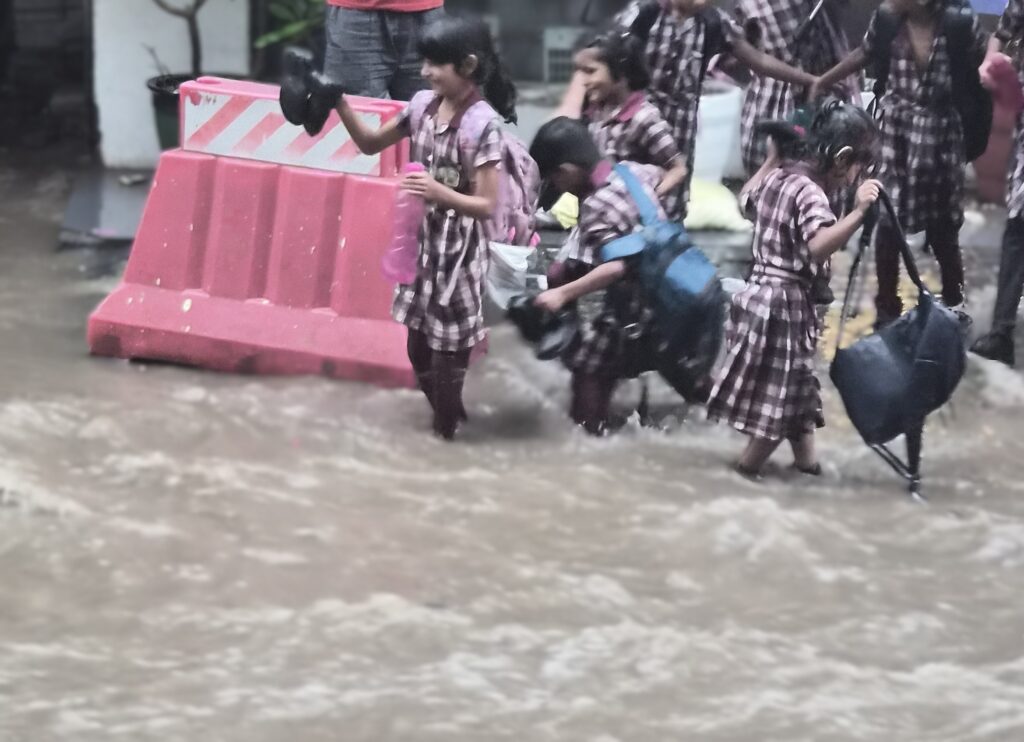
One of the most meaningful lessons so far has been discovering beauty in moments that, at first glance, could easily be viewed as inconveniences. We visited the Lotus Temple during heavy rain, and the weather meant I could only appreciate the building from the outside. Initially, I felt disappointed because I had imagined seeing much more. Yet, almost at the same time, I watched a group of schoolgirls laughing and dancing in the pouring rain. They were completely unconcerned about getting wet or changing their plans. Their joy was contagious. While I stood wishing the rain would stop, they embraced it completely.
That moment stayed with me far more than the architecture itself. I realized that sometimes the most memorable experiences are not the ones we carefully plan but the ones that simply happen while we are busy wishing circumstances were different. The rain that prevented one experience created another that I will likely remember much longer. It reminded me that perspective shapes experience. The same rain can be viewed as an obstacle or as an invitation to find joy in an unexpected place.
This journey has also shown me that grief and joy are not opposites. Before leaving for India, I wondered how this trip would feel knowing that Matt was supposed to be part of it. There have been moments where I miss him deeply, and I know those feelings will continue to surface throughout this journey. At the same time, I have experienced places that we talked about.
Walking through A dear friend’s family farm was incredibly emotional because it was somewhere I had imagined visiting long before this trip ever became reality. Standing there, I found myself thinking about the conversations we had and the letter he had written me many years ago. Before that, seeing the Taj Mahal was another moment that carried both wonder and sadness. It is one of those places that almost does not seem real until you are standing in front of it. It was breathtaking, yet there was still an awareness that someone important was missing from the experience.
For a long time, I thought grief would somehow diminish the joy of this trip, or that experiencing joy might somehow lessen my grief. Instead, I am learning that both emotions can exist together. Missing someone does not prevent us from appreciating beauty, and appreciating beauty does not mean we have forgotten the person we miss. If anything, these experiences have made me feel even more connected to Matt because so many moments are filled with memories of the plans we made together. Rather than taking away from the journey, those memories have become part of it.
As I reflect on these first days in India, I realize that the greatest lessons have not come from monuments or famous landmarks. They have come from adapting when payments failed, finding solutions when accommodations changed, accepting unexpected changes to carefully planned itineraries, watching children dance in the rain, and discovering that the heart has room for both sorrow and gratitude at the same time.
Perhaps that is what travel really teaches me. It is not simply about seeing new places. It is about becoming more comfortable with uncertainty, learning to adapt, finding beauty where we least expect it, and recognizing that life’s most meaningful experiences often happen in the moments we never planned for. These first few days have already reminded me that flexibility is not about giving something up; it is about remaining open to discovering something even greater than you thought.