

Learning Through Connection
Arriving at the school and receiving such a warm welcome immediately made our team feel special and appreciated. There was a genuine sense that people were happy we were there. One of the most meaningful moments for me was receiving bracelets given in friendship. It was such a simple gesture, yet it brought tears to my eyes both for the friend I am missing and the friends I am making. Throughout this trip, I have been reminded repeatedly that connection does not always require complicated words or grand gestures. Sometimes something as small as a bracelet can communicate welcome, friendship, and belonging.
Day One – Finding My Feet as a Mentor
I was nervous beginning my first day as a mentor. My group included girls from both schools, which meant they were also navigating new relationships with one another. Early in the session, some of the visiting girls got into a little trouble regarding their phones. I noticed an immediate change afterward. They became much quieter and seemed to shut down for a period of time.
It made me think about how quickly the dynamics of a space can change when someone feels they have done something wrong or has been corrected by someone in authority. From a social work perspective, it reminded me how important psychological safety can be when we are asking people to participate, speak honestly, or discuss personal subjects such as consent.
I was already nervous and uncertain about how the sessions would go, but once we actually started, those nerves began to disappear. I learned from the girls as much as I hope they learned from me.
I also immediately found things I would change about my facilitation. The scenario cards were arranged in order, which made the activity more predictable and resulted in less discussion than I had hoped. Next time, I would mix them up. It was a small mistake, but an important reminder that facilitation requires flexibility and constant adjustment based on how participants respond.
The girls particularly enjoyed bingo and the comic activity. Seeing which activities encouraged participation gave me ideas about how creative and interactive approaches can make conversations about difficult subjects more accessible.
Afterward, I went to have my hair washed and styled and somehow ended up with a thirty-minute massage included. Definitely not something I was expecting!
Another unexpected reflection came from Instagram. Many classmates exchanged their Instagram accounts with students, and initially I felt bad that I did not have one. I even created an account, but later realized that social media is simply not something I am particularly interested in. It was a small lesson in boundaries and authenticity. Connection does not require me to participate in something simply because everyone else does.
Day Two – Learning Goes Both Ways
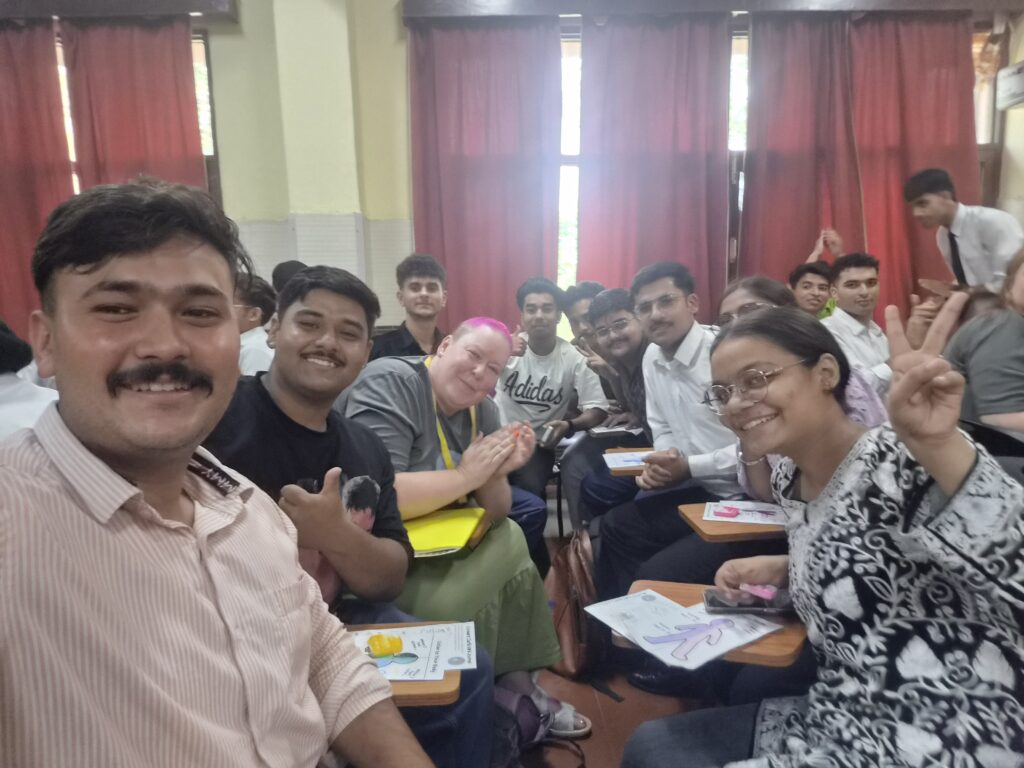
Day two brought an entirely different group dynamic. I had a small group of boys ranging from approximately eight to thirteen years old. To me, that felt like a significant developmental age gap, and I wondered how the activities would work across those ages.
Once they understood the gingerbread activity, they really enjoyed it. Something else I noticed was how their behaviour changed whenever teachers came close. They became quieter and seemed less willing to talk openly. It made me think again about power and authority and how strongly the presence of an adult authority figure can influence what young people feel comfortable saying.
During the session, my Dexcom kept alerting because my blood sugar was low. The boys became concerned that I would get into trouble for using my phone. I explained that my phone was helping me stay safe and that my teachers knew about it and would help me if I needed them.
There was something incredibly sweet about their concern. It also created an unexpected opportunity to demonstrate that sometimes accessibility or health needs may look like someone is breaking a rule when they are actually using a tool that allows them to participate safely.
Then the roles reversed completely when the boys decided they needed to teach me about cricket. Those moments were some of my favourites because I was no longer simply the mentor. They became the teachers and I became the student. It created a more equal relationship and reminded me of the importance of reciprocity. Social work is not about entering a community assuming we are the experts. The people we work alongside always bring their own knowledge, skills, culture, and experiences.
My own team was also watching out for me because of my blood sugar. Accepting their concern and help was surprisingly difficult. I am much more comfortable being the person offering support than receiving it. Allowing other people to care for me was uncomfortable, but it was also deeply appreciated.
Day Three – Listening to What Is Not Said
Because I was still having a rough time with my blood sugar, I chose to stay at the hotel while others explored the market or had their hair done. It was disappointing to miss out, but I knew that taking care of myself needed to come first.
The school group that day was mostly boys, and they brought a tremendous amount of energy, which I actually really enjoyed. They also decided to teach me some Punjabi. Apparently, an important phrase for me to know is “Main ik devi han” — “I am a goddess.” I am not entirely sure when I will need this phrase again, but I am keeping it!
There were some interesting dynamics within this group, including a courting pair, and one boy simply deciding the session was not for him and leaving. Rather than viewing that negatively, I found myself thinking about consent within our own activity. If we are teaching that people have the right to say no, we also have to respect when someone decides that participating is not for them.
This group absolutely loved the fidgets. More importantly, they seemed to understand the basic concept of consent. Their concern was not necessarily understanding consent themselves; they questioned whether teachers or parents would understand and respect it.
That stayed with me.
It reminded me that teaching young people about consent cannot exist entirely in isolation. We can encourage young people to recognize boundaries and use their voices, but the adults and systems around them also need to be prepared to hear those voices.
Day Four – Cultural Humility and Changing Perspectives
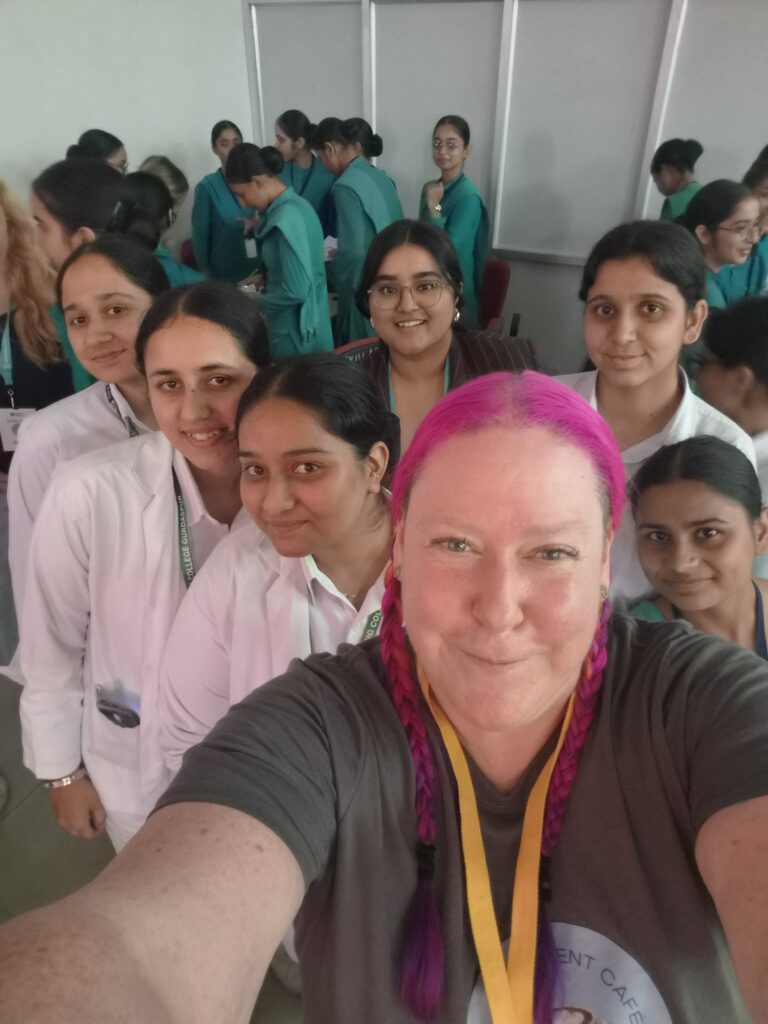
I was very happy to return to morning mentoring. My group was small—only six girls—and much quieter than the previous groups. One girl seemed to understand the activities particularly well and naturally began helping the others, which was wonderful to watch.
One of the girls had recently gotten married and seemed impressed that I knew about the significance of some of the bracelets. Once again, my hair and my age became topics of great interest. These conversations might seem unrelated to our purpose at the school, but I have started to appreciate them as part of relationship-building. Curiosity goes both ways.
The girls felt that their teachers would generally ask about their boundaries and respect a “no” when there was a reasonable explanation. Their perspective challenged some of my own assumptions and reminded me of the importance of cultural humility: listening to how people understand their own relationships and experiences rather than immediately interpreting them through my own Canadian perspective.
I also went back on my earlier decision about Instagram. Because the girls were not allowed to have their phones during class, I agreed to post some photographs so they could see and share them later. It made me reconsider the difference between changing a boundary because of pressure and intentionally adjusting one when there is a meaningful reason. I still do not particularly want Instagram, but in this situation it became a practical way of maintaining a connection.
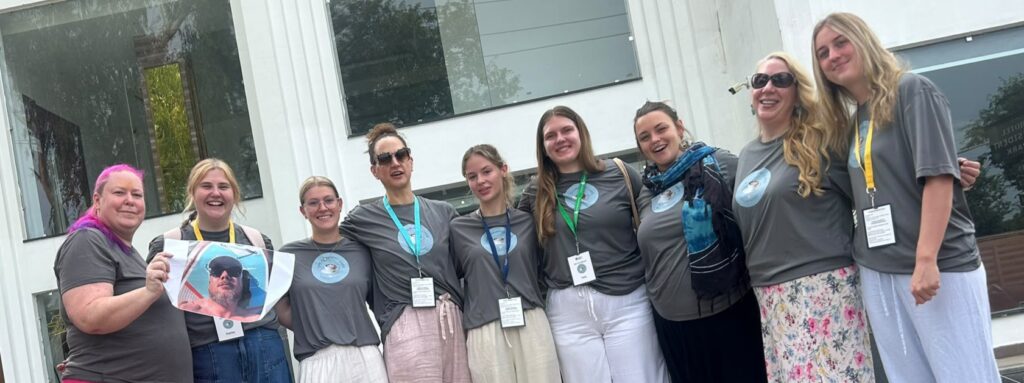
We also took a group photograph with Matt today, which I am especially looking forward to sharing. Even while I am immersed in teaching, learning, laughing, and meeting new people, he continues to be part of this journey.
The girls also gave me more context about why certain things concerned them. Their explanations made sense within the group and cultural context, although I realized afterward that I might have worded some of my questions differently if I had understood that context beforehand. That may be one of the most important lessons I am taking from these sessions: cultural humility is not about knowing everything before entering a space. It is about being willing to listen, recognize when our assumptions are incomplete, adjust our approach, and continue learning.
Looking back across these four days, I can see myself becoming more comfortable as a mentor. Each group has been completely different, and each has required me to adapt. Some participants were quiet, others energetic. Some activities worked better than expected, while others showed me exactly what I would change next time.
Most importantly, I am learning that mentoring is not a one-way exchange of knowledge. The students have taught me about cricket, Punjabi, relationships, family expectations, friendship, culture, and their understanding of consent. They have also reminded me how much information can be communicated through silence, body language, laughter, curiosity, and even a simple bracelet given in friendship.
I came here prepared, but increasingly I am realizing how much of this experience is about learning to listen.