
August 7, 2026
As I reflect on my third journal entry and the first full week of the field school in India, I think many of my views about how I want to approach my future social work practice have stayed similar to my previous entry. However, each Consent Café workshop has continued to challenge me in diverse ways and has reinforced how important flexibility, curiosity, and adaptability are when working with different groups and cultures.
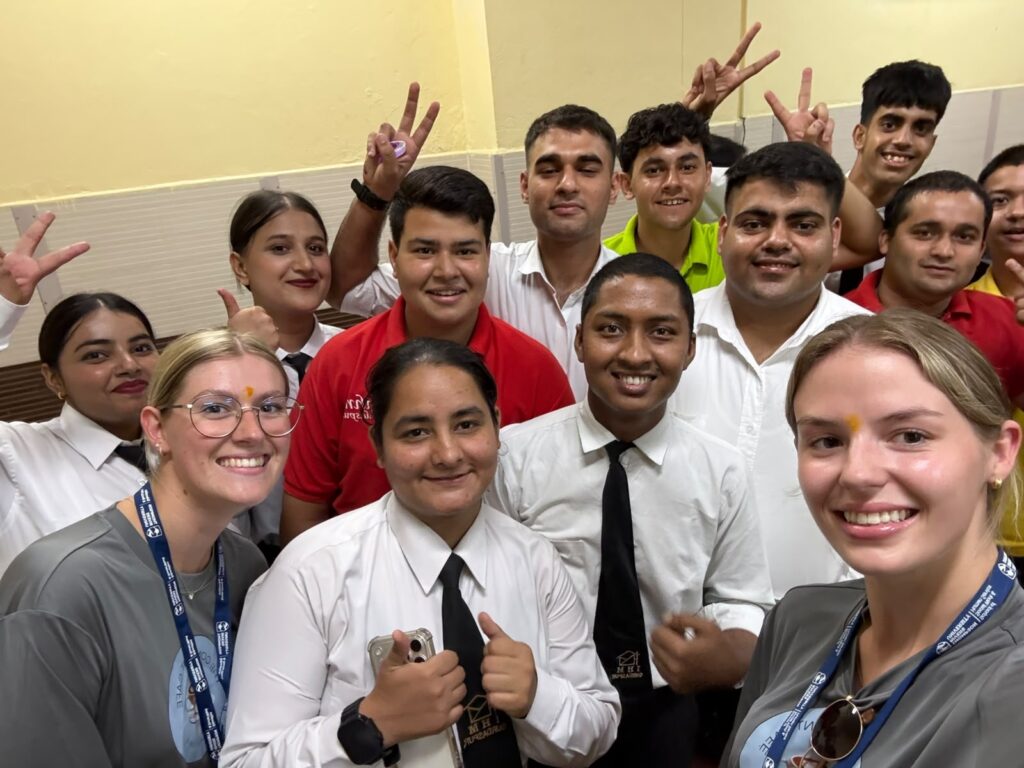
One experience that stood out this week was our workshop at the hospitality college. This workshop felt quite different from the first two schools we visited. Olivia and I had a larger group, primarily made up of young men around our age. It was much more difficult to get them engaged with the material and even with the overall presentation. There were definitely moments when I felt frustrated. Our group would be quiet, while other groups would sometimes talk over Chelsea and Tonya while they were presenting. I remember thinking, Can we just listen to the presentation? We are only here for two hours, and we are asking for your attention during that time.
Another difference was that this was the first school we visited where the participants had their phones with them throughout the workshop. Some participants even answered phone calls during the presentation without leaving the room. This surprised me because it was so different from what I am used to in Canada, where someone would generally leave the room if they needed to take a call. At the same time, I must recognize that my reaction comes from my own expectations and experiences. Being in an unfamiliar cultural and educational environment means that I cannot automatically assume the expectations I am familiar with in Canada will apply here. One positive aspect of this workshop was that the participants generally had strong English skills, so language was less of a barrier than it had been at some of the other schools.
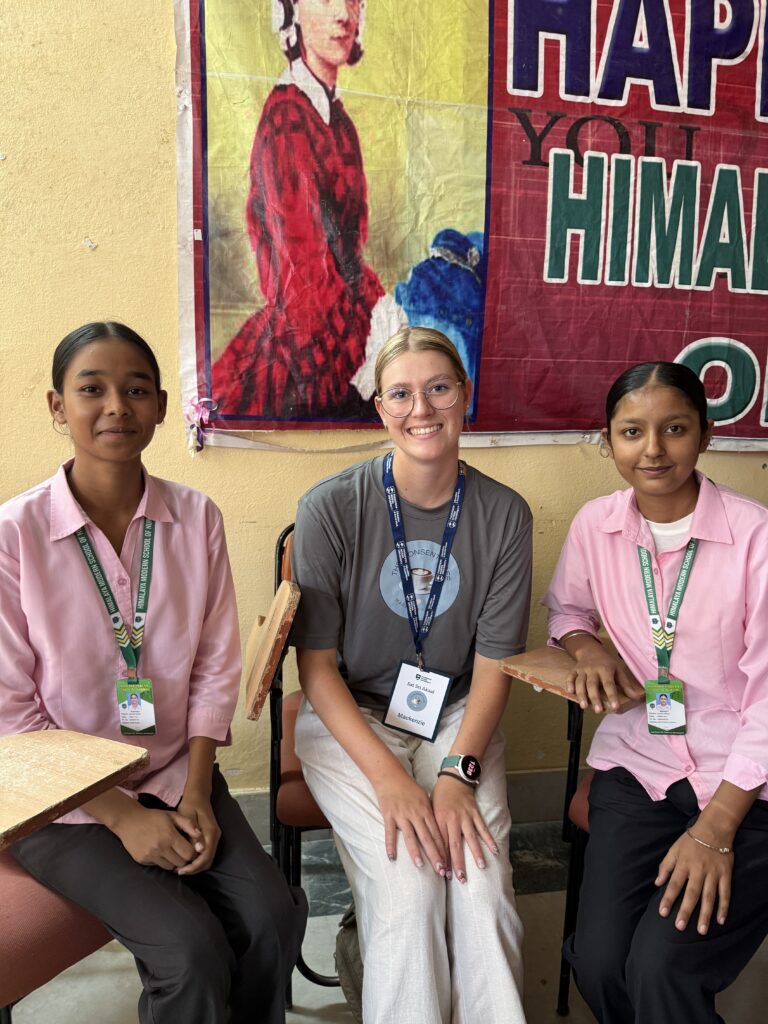
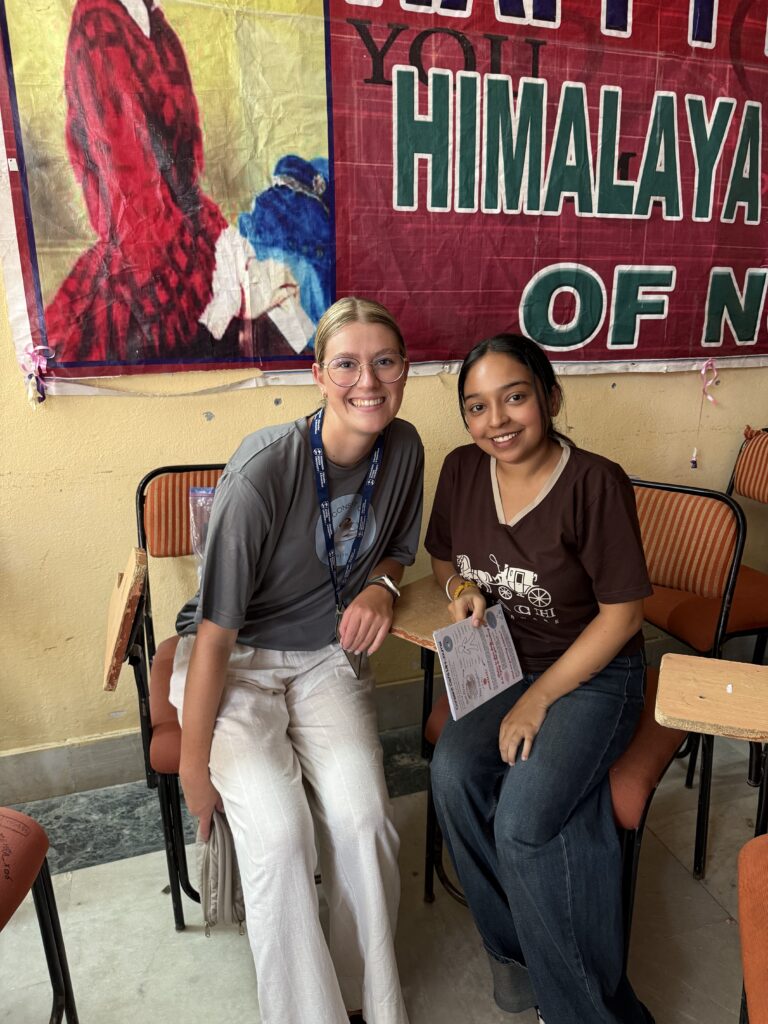
Our next workshop was at another nursing college, and the experience was almost completely different. The participants were a mixture of males and females, although the group was mostly female, and they were approximately 18 to 24 years old. At this college, language was a much more significant barrier. Within my small group, I could tell that the participants understood much of what I was saying and the questions I was asking, but they struggled to communicate their answers back to me in English.
Instead of continuing to ask questions in a way that clearly was not working for the group, I decided to adapt. I told them that they could speak to one another in whatever language they felt most comfortable using. What mattered to me was that they were engaging with the material, not that they were answering me in English. One participant had stronger English skills, so after the group discussed each question together, she would share some of what they had talked about with me. This ended up working much better. I realized that if my approach was not encouraging participation, then it was my responsibility to change my approach rather than expecting the participants to change for me.
This experience connects strongly to the kind of social worker I want to become. Communication does not always have to happen in the way that is easiest or most familiar to me. If I want people to meaningfully take part, I need to create space for them to communicate in ways that feel comfortable and accessible to them. Especially when discussing topics like consent, it seems important that participants are able to understand, reflect on, and discuss the material rather than focusing on whether they are communicating it perfectly in English.
Overall, the first week of the field school has been really positive, although it has also been exhausting in ways I did not necessarily expect. Our schedule has actually been more flexible than what I am used to at home. I am normally constantly going from the moment I leave the house until I come home for dinner and bed. Here, our Consent Café workshops may only last a couple of hours, or we might not have one until later in the afternoon. Having that extra time has been nice because I can work on other coursework, connect with family at home, or simply have some time to myself.
Even with that flexibility, Monday through Friday felt exhausting because of the amount of socializing, learning, facilitating, and reflecting we were doing. I was not only learning the Consent Café material myself but also constantly taking feedback and thinking about what I noticed during each workshop. After every school, I found myself considering what worked, what did not work, how I could improve my engagement, and what I could do differently with the next group. I am really pleased with the growth I have noticed in myself. With each workshop, I feel more confident in my knowledge of the content and in my ability to interact with participants, ask questions, and create conversations around the material.
I did notice that participation seemed to decrease during the last two workshops compared with the beginning of the week. I am still unsure exactly why. It could simply be because every group is different, or it could partially reflect our own tiredness after facilitating workshops each day. We are also seeing groups at different times of the day and in very different environments. There are so many factors that can influence how a group responds. I think recognizing this is important because it prevents me from immediately assuming that low participation means I am doing something wrong or that the participants are uninterested.
One thing I have really enjoyed is that no two groups have been the same. We never completely know what to expect when we walk into a new school, and I actually enjoy that. It forces me to think on my feet and adapt rather than relying on one approach.
This week has ultimately reaffirmed several things about how I want to approach my future social work practice. I want to remain open to learning, especially when I enter communities or cultures different from my own. I want to ask questions rather than make assumptions, remain curious when something feels unfamiliar, and recognize when I need to change my approach to better meet the needs of the people I am working with. These workshops have shown me that being prepared is important, but being willing to adapt might be even more important. I am beginning to see that some of the most valuable learning from this field school is not necessarily coming from the material we are teaching, but from learning how to connect with people when each group, environment, and interaction is completely different from the last.