
August 12, 2026
For my fifth journal entry, I am reflecting on the last two days of our field school activities. Although this entry may be a little shorter than my previous ones, these final experiences gave me a lot to reflect on. Particularly around engagement, cultural exchange, self-awareness, and what I am continuing to learn about my future social work practice.
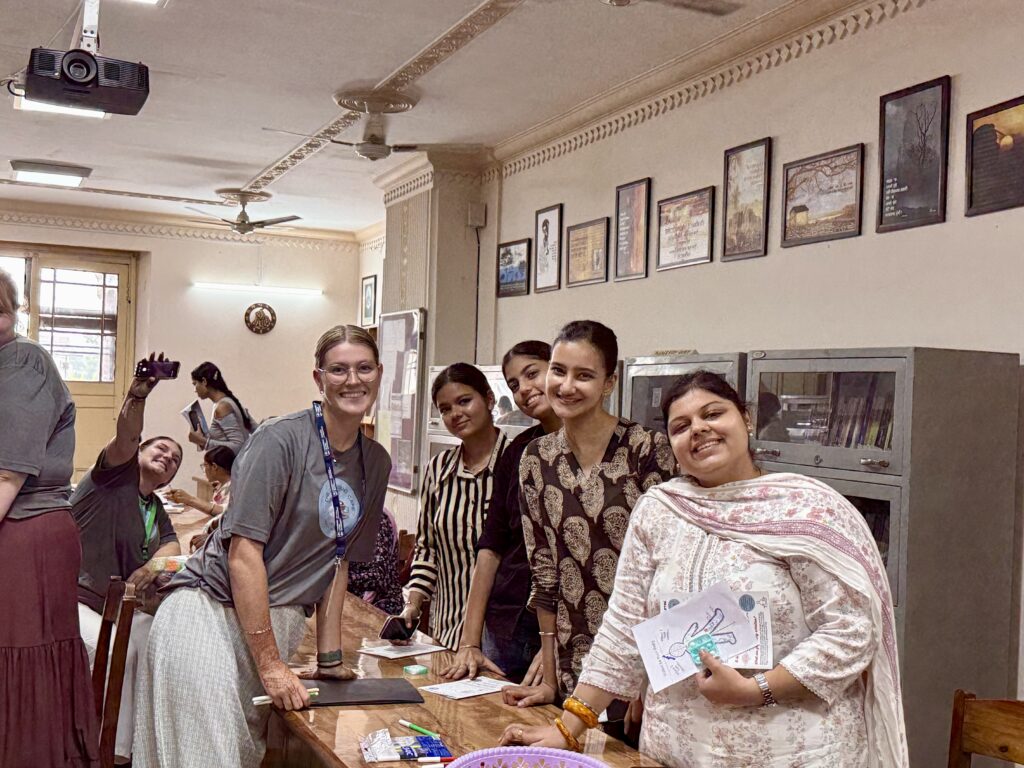
On Tuesday, August 11, we visited our final school, Khalsa College in Amritsar, where we facilitated our last Consent Café workshop. The workshop took place in what seemed like a small library or similar space. Although the room was quite small, I actually really liked the setup. Each of us mentors had a group of approximately three or four people, which made the conversations feel much more personal. All of the students and professors participating were from the English department, and my group consisted of two professors and two students.
The participation within my group was amazing, especially from one of the professors. The professor was very open to sharing some of her own experiences and knowledge and thinking about how she could bring conversations about consent into her own classroom and communication with students. She also asked really meaningful questions throughout the workshop. I appreciated that her questions did not feel like she was questioning why we were teaching certain things, but instead that she genuinely wanted to understand how the activities could be useful and applied beyond the workshop.
One example was during the gingerbread person activity, when she asked about the purpose behind identifying what stress and calm feel like in our bodies. Her question gave me the opportunity to explain the activity in more depth. If we can recognize what our bodies and emotions feel like when we are stressed compared to when we are calm, we can also begin identifying strategies that help us emotionally regulate ourselves. We can look at the things we identified on the “calm” side and consider how we might use some of those strategies to help move ourselves from a stressed state toward a calmer one. I really appreciated having to explain the reasoning behind the activity because it also made me think more deeply about why we include certain components in the Consent Café. Instead of simply facilitating an activity because it is part of the workshop, I had to think critically about its purpose and how I could communicate that purpose to someone else.
Overall, I think this was one of the strongest interactions I had during our workshops. Having such a small group allowed for deeper conversations, questions, and participation. It was also interesting to finish our school visits with such an engaged group after experiencing very different levels of participation throughout the field school. It reminded me that engagement can look very different depending on the environment, group dynamics, physical setup, and the people participating. Looking back at the different schools we visited, I think I have become much more aware of how important it is to adapt to the group in front of me rather than expecting every group to respond in the same way.
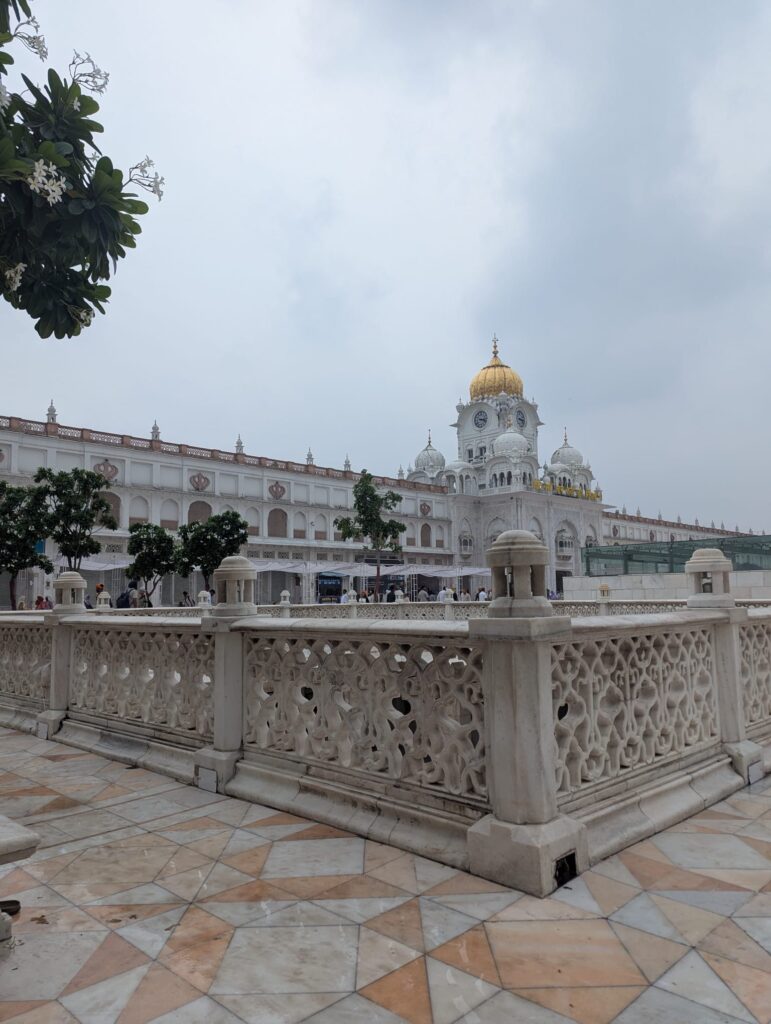
While we were in Amritsar, our group also had the opportunity to visit the Golden Temple. I ultimately chose not to join the rest of the group for this part of the day. Throughout this field school, our schedule has been incredibly busy, both socially and emotionally, and we have spent a significant amount of time travelling, participating in activities, visiting schools, and constantly being around groups of people. By this point in the trip, I realized that I needed a break from being around large amounts of people and some time to recharge.
Although visiting the Golden Temple would have been an incredible cultural experience, I think choosing not to go was also an important moment of recognizing my own needs and limits. There has sometimes been a feeling throughout this trip that I need to participate in every opportunity because I am in India and may never have the chance to experience these things again. At the same time, I knew that continuing to push myself when I was already feeling overwhelmed by how busy everything had been would not necessarily allow me to appreciate the experience in the way I would have wanted to. I needed to recognize that it was okay to miss one experience in order to give myself the break that I needed.
I think this decision also connects to my future social work practice because social work requires being aware of my own capacity and recognizing when I need to step away or recharge. Throughout this trip, I have been learning a lot about being present for other people, adapting to different environments, and engaging with new experiences. However, being present also requires being aware of myself. Choosing not to participate in one activity did not mean that I valued the cultural experience any less. Instead, it was about recognizing what I needed at that moment so that I could continue to be present and engaged throughout the remainder of the field school. I think learning to recognize those limits will be important in social work, especially in a profession where burnout and emotional exhaustion can happen when we are constantly focused on supporting others without recognizing our own needs.
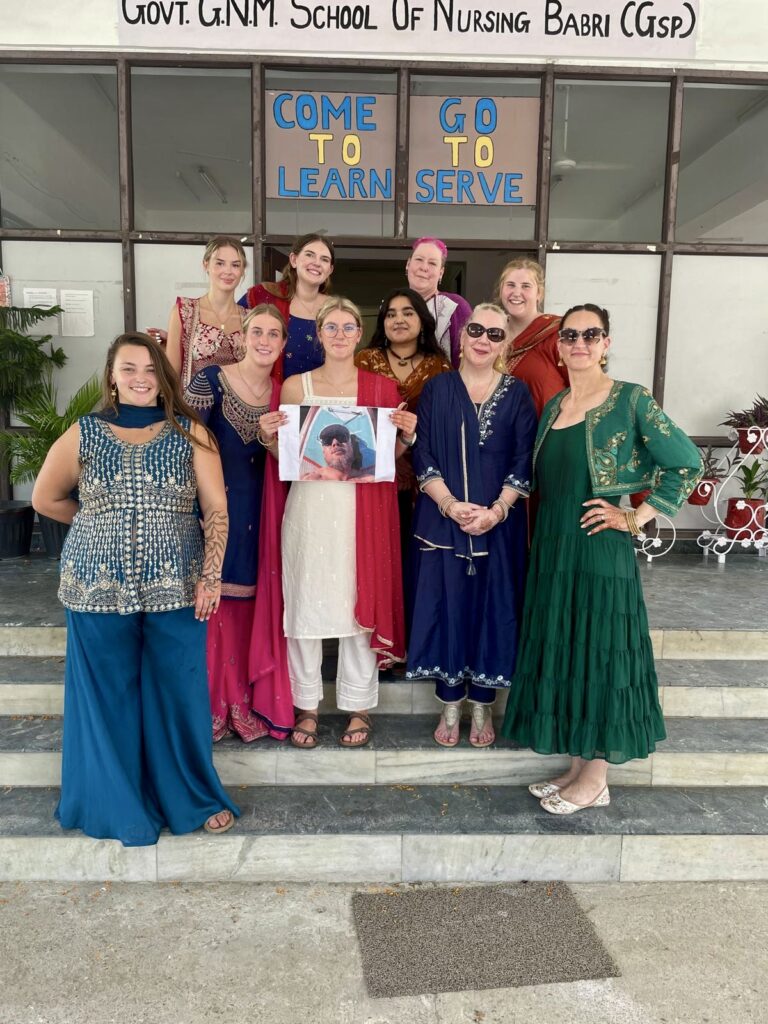
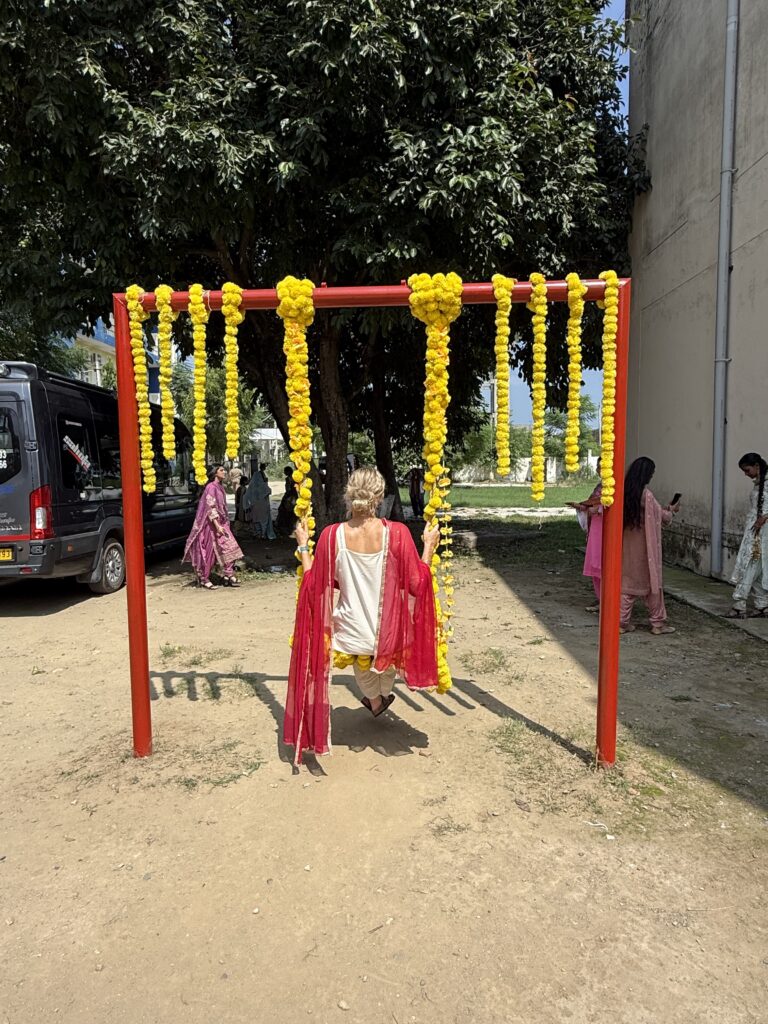
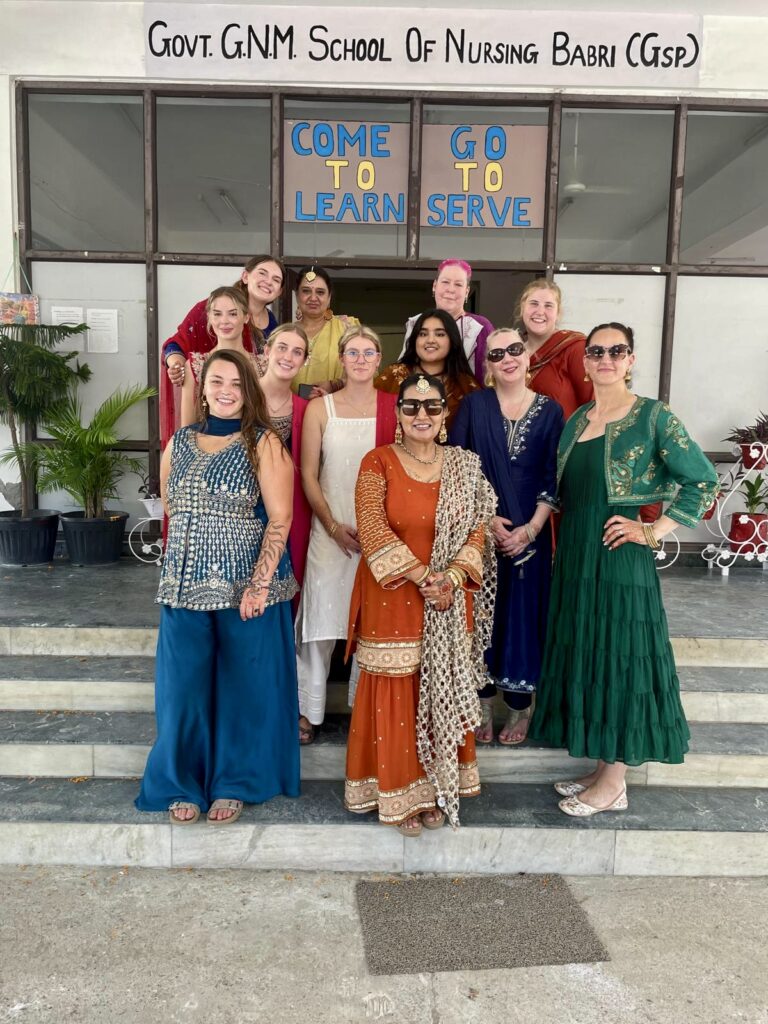
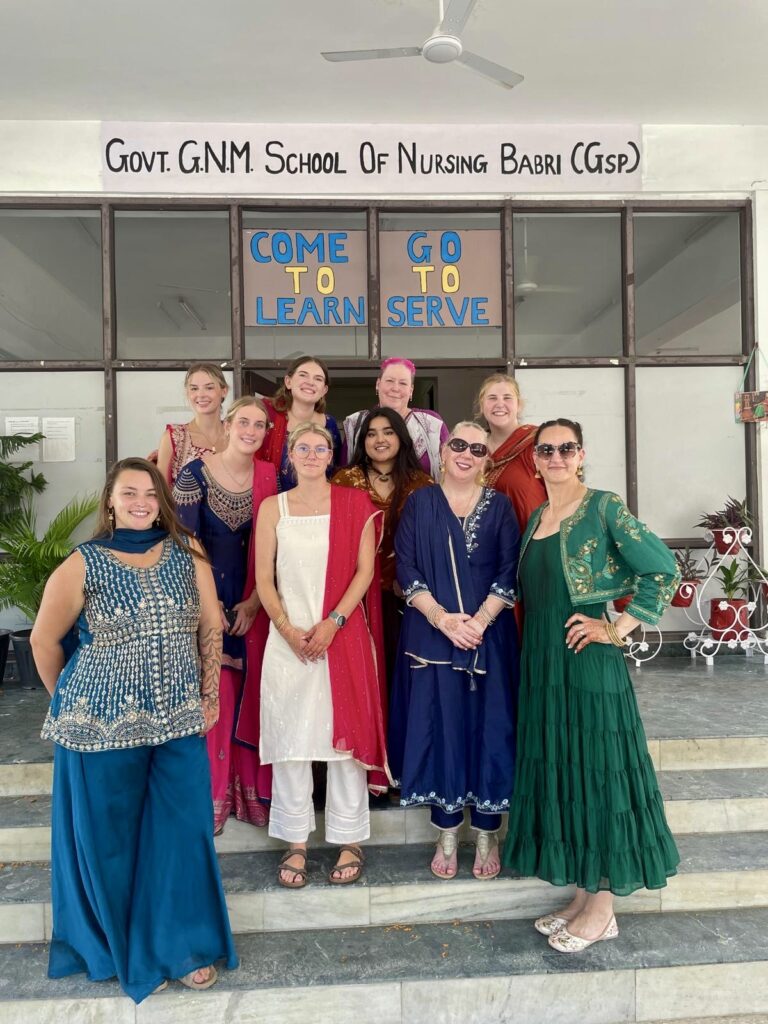
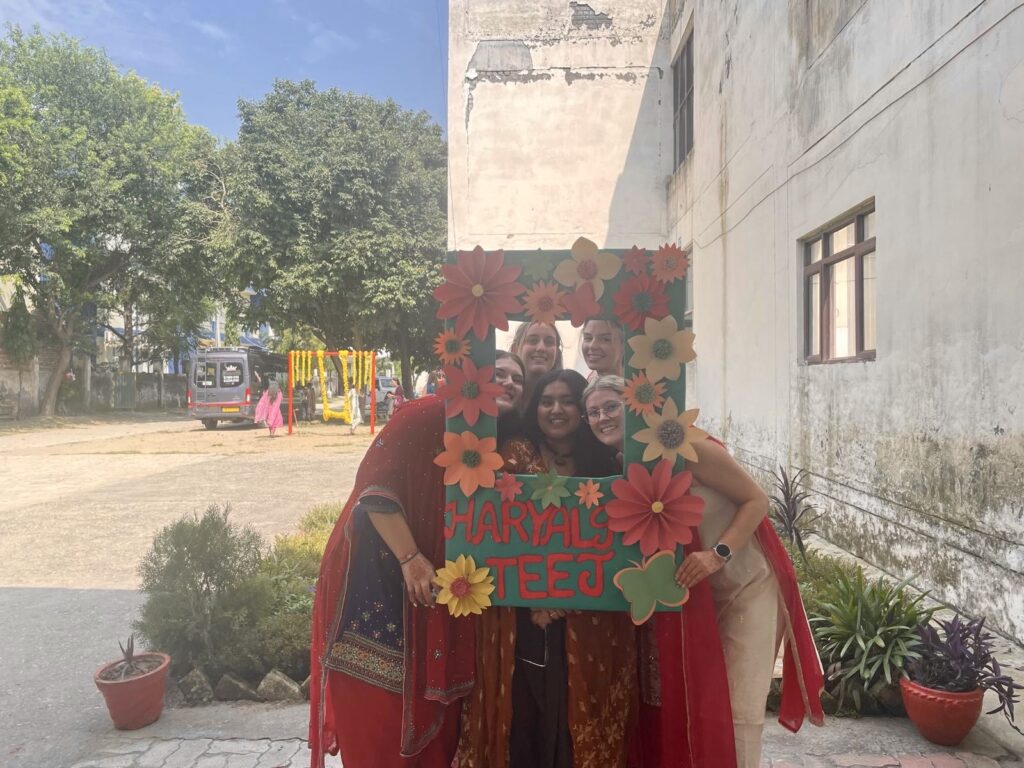
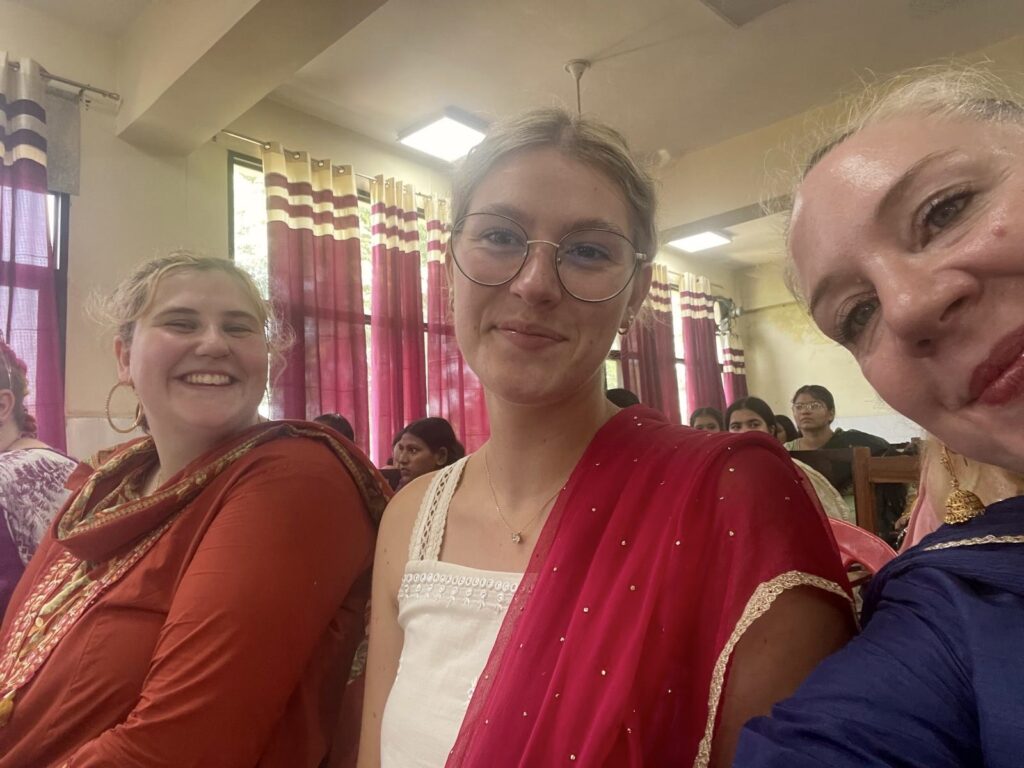
Today, August 12, we returned to the nursing college where we began our field school for a Miss Teej celebration ceremony. A Miss Teej ceremony is a traditional celebration connected to the Teej festival, which celebrates womanhood, relationships, culture, and community. During a Miss Teej event, participants dress in traditional clothing, perform dances and/or songs, and take part in a pageant-style celebration that highlights cultural pride, confidence, and the traditions associated with Teej. The ceremony was beautiful and gave us another opportunity to learn about Indian culture and traditions. We were also wearing traditional Indian clothing, which was such a fun and meaningful experience. I felt incredibly grateful that we were invited to participate in the celebration and that so much effort was put into welcoming us and sharing their culture with us.
It was especially meaningful seeing some of the students from earlier in the trip again. They seemed genuinely excited that we had returned, and it was powerful to have another opportunity to interact with them, this time in a very different setting. Earlier in the field school, our relationship had primarily been centred around us facilitating the Consent Café and sharing information with them. During the celebration, there was more of an opportunity for them to share their traditions and culture with us. I think that shift was important because it reminded me that international social work experiences should involve mutual learning rather than seeing ourselves as simply coming into another community to teach something. We came to India with knowledge and a program to share, but we have also spent so much of this experience learning from the people we have met.
When I reflect on what these experiences mean for my future social work practice, many of the ideas I have discussed in my previous journal entries continue to be reinforced and solidified. Throughout this Field School, I have become increasingly aware of the importance of listening, adapting, asking questions, building relationships, and recognizing that I will not always enter a situation knowing exactly what another person or community needs. These final two days continued to reinforce the kind of social worker I hope to become. I want to be someone who is open to learning from others, willing to reflect on my own practice, aware of my own limits, and able to adapt my approach depending on the people and environment I am working within.
This experience has also made me think more seriously about international or travelling social work. Before this field school, it was not necessarily something I had considered, but it has definitely become a thought in the back of my mind. When I return to Canada, I would be interested in connecting with someone who has experience working internationally as a social worker to better understand what that type of practice actually looks like, the opportunities that exist, and the responsibilities that come with doing social work across different cultural contexts. I do not necessarily know what that would look like for me yet, but this experience has made me interested enough that I would like to explore it further.
As this field school begins to come to an end, I think many of the lessons I have reflected on throughout my journal entries are becoming less about individual workshops or activities and more about the overall kind of practitioner I want to be. These last two days included very different experiences like facilitating our final Consent Café, making the decision to recognize my own limits and take a break, and then being welcomed into a cultural celebration. In different ways, each experience reminded me about the importance of connection, curiosity, reciprocity, self-awareness, and being willing to learn from the people around me. Those are lessons I hope to continue carrying with me as I move forward in my social work education and eventually into my own practice.