
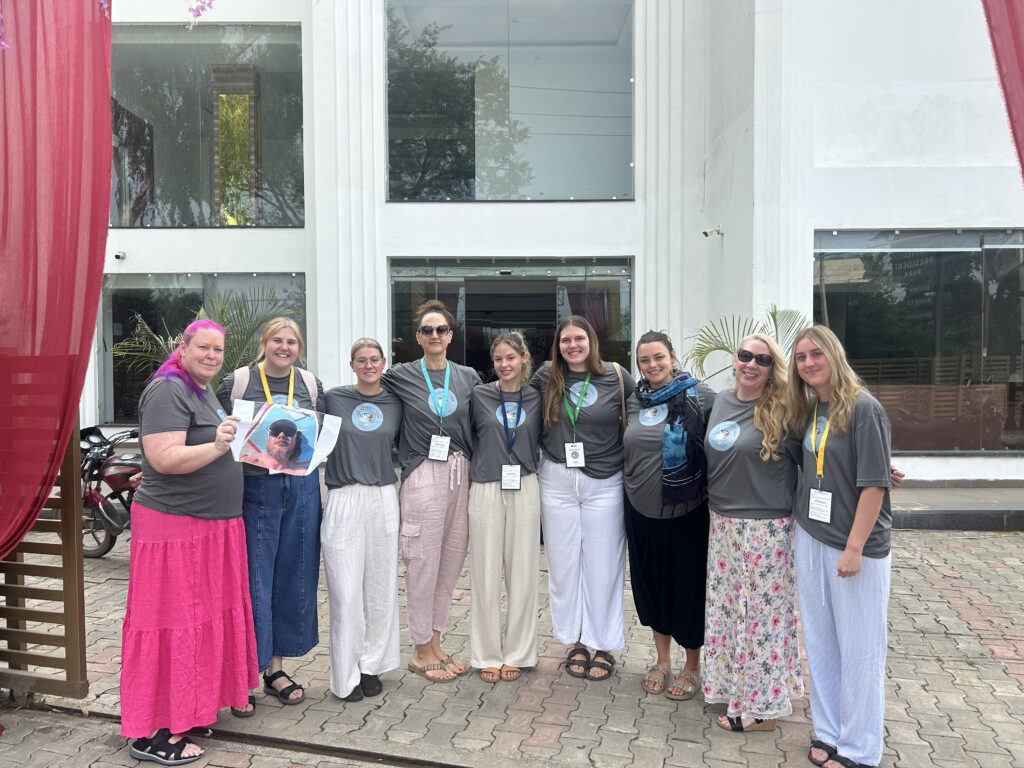
I have spent a lot of time reflecting on the importance of the work we have done in India. I have always had a passion for sexualized violence response and prevention, so being able to take the knowledge and experience I gained in Canada and bring it into an international context has been life-changing. Being able to learn from students in India while also sharing the knowledge I developed throughout my third-year practicum was an absolute dream. This experience allowed me to see how education around consent and sexualized violence can be adapted across different cultures while still creating meaningful connections.
One of my main goals coming to India was to connect with the students and make them laugh. I believe humour and laughter can be powerful tools for connecting with people, regardless of where they are from. I felt that I was successful in this goal at every school we visited. I also noticed that the energy of the students directly affected my own energy. When the students were engaged and excited, it was much easier for me to be energetic and enthusiastic while teaching. Their energy was something I could feed off of, which made the learning experience more fun and engaging for everyone. I believe people learn more effectively when they are genuinely engaged with the material rather than simply being expected to listen.
This was especially noticeable during the activities we completed. It was incredibly encouraging to see students understand what they were being asked to do and produce thoughtful examples and meaningful discussions. Some of the conversations were genuinely inspiring, and I was impressed by how willing many students were to participate and share their perspectives.
One of the things I found most interesting during these discussions was the relationship between consent and students’ relationships with their parents. When I asked groups about consent, most students understood that it involved permission. However, many of their examples focused on asking their parents for permission to leave the house. I found this particularly interesting because many of the students we were teaching were over the age of 18. The idea of needing to ask your parents for permission to leave the house is very different from my own experience growing up in Canada. I recognize that this difference is connected to cultural expectations, family structures, and concerns about safety.
In Western culture, I feel that young people are generally given more independence and freedom to make their own decisions and communicate openly with their parents. For example, I feel comfortable expressing anger or disagreement with my parents when I feel that they have crossed one of my boundaries. To me, this is a form of communication rather than disrespect. Through these conversations in India, I began to recognize that some of the students do not always have the same freedom to communicate their feelings or challenge their parents’ decisions. Some students explained that when they expressed frustration, their parents would tell them that they should be grateful because they were fed and had a roof over their heads. While I understand that this comes from a place of providing and caring for their children, I also recognized how this response can dismiss or minimize the young person’s feelings.
At the same time, I began to understand why parents may be more hesitant to allow their children, particularly young women, to leave the house independently. Safety is a significant concern. I have never had to think as deeply about my own safety as I did while in India, beyond the types of safety concerns that have unfortunately become normalized for women across many cultures. During my time here, I experienced an increased awareness of the risk of sexualized violence through comments and interactions from men, and I found this frightening. It made me think about what daily life may be like for women who experience these risks regularly. I also recognize my privilege in being able to return to Canada, where I feel safer, while many of the women I met do not have the option to simply leave their country in response to these experiences.
Another aspect of the Consent Cafés that stood out to me was the students’ willingness and excitement to learn about consent and apply it to their own lives. Most of the students we taught understood the material and were willing to provide examples of consent from their own experiences. The activities especially demonstrated how much they were retaining and understanding. Although every group was different in terms of their energy, participation, and understanding of the material, I felt that every group learned something new and was excited to be there.
This experience was different from some of my experiences with consent education in Canada. During the Consent Carnival I participated in during my practicum, I noticed that Canadian students sometimes appeared more hesitant or shy when discussing consent and sexualized violence. I also felt that some students were more uncomfortable engaging with the topic. Through my practicum and this experience facilitating Consent Cafés in India, I have become much more confident in my knowledge and ability to provide prevention and response education surrounding sexualized violence. I am excited to continue sharing this knowledge with others.
At the same time, I recognize that there were important cultural differences between facilitating a Consent Café in Canada and facilitating one in India. I noticed more hesitation when discussing sexualized violence in India, which I believe may be connected to cultural norms and taboos surrounding conversations about sex and sexuality. In Canada, I feel more comfortable discussing these topics because I have grown to understand the importance of talking openly about sexualized violence in order to create change. In India, I initially felt more shy and uncertain because I was less familiar with the cultural norms and boundaries surrounding these conversations. As I became more comfortable, I learned how to gauge what each group was comfortable discussing while still remaining true to myself and my beliefs. I wanted to approach these conversations respectfully while also being willing to challenge barriers and norms when doing so could help empower others.
One of the more personal reflections I have had throughout this experience relates to how I see myself in conversations about sexualized violence. When teaching about sexualized violence in Canada and discussing how female students can experience it, I sometimes felt uncomfortable knowing that students in India might see me as someone who has experienced sexualized violence. Logically, I know that there would be nothing wrong with them making that connection, and it may even help students relate to me and feel more comfortable discussing the topic. However, I have recently begun recognizing experiences of sexualized violence in my own life, and I have struggled with the idea of giving those experiences that label. Part of me has felt that what I experienced was not “enough” or did not matter enough to be considered sexualized violence.
At the same time, I know that if one of my friends told me they had been catcalled or had been grabbed by the waist at a club, I would immediately recognize that as sexualized violence. This is something I have been reflecting on for a while, and I am beginning to come to terms with the fact that all sexualized violence matters. There is no hierarchy in which some experiences are important while others are acceptable. Sexualized violence is not okay simply because someone else has experienced something that appears more severe. Every person deserves to have their boundaries respected, and every experience deserves to be taken seriously.
Overall, I have learned a significant amount about consent, both as an educator and as an individual. I came into this international Consent Café experience wanting to learn from students in India while also sharing the knowledge I had gained through my experiences in Canada. I believe I was successful in doing both. Being able to participate in Consent Cafés as both a learner and a mentor has made me recognize how much work still needs to be done around the world to create environments where women and all people can feel safe, have their boundaries respected, and live in a world grounded in consent and free from sexualized violence.
This experience has strengthened my passion for sexualized violence prevention and response and has shown me the importance of bringing these conversations into different communities while remaining open to learning from the people within them. I came to India hoping to teach, but I am leaving knowing that I learned just as much.